A Well Placed Quilt
I am going to make everything around me beautiful - that will be my life.
Elsie de Wolfe
I do adore quilts and have been known to covet one or two…probably more. The colour, the pattern, the geometry, and the quiet thinking behind every cut piece and stitch. A well-made quilt brings warmth and meaning to a home in a way few objects can.
Many years ago, in my quest to fill my home with patchwork and quilting comfort, I learned how to make a quilt and went on to sew several more as gifts. My son still has my original creation. One daughter has a childhood Dresden Plate quilt, and another has a half-finished quilt top that now lives among my many UFOs (unfinished objects). While I loved the intention behind quilt-making, I eventually realised that the making itself wasn’t where my joy lived.
What stayed with me was the fabric.
I collected it, studied it, and admired quilts at exhibitions and fairs, sensing they were leading me somewhere. Discovering surface pattern design finally made sense of that instinct. Quilts weren’t the end point; they were the beginning.
Today, when I design quilt fabrics and home décor textiles, I think less about patterns in isolation and more about how a quilt feels once it’s finished and in use. The mood of a quilt is shaped by far more than its design. Colour, scale, fabric choice, and even batting all play a role in how it lives within a home.
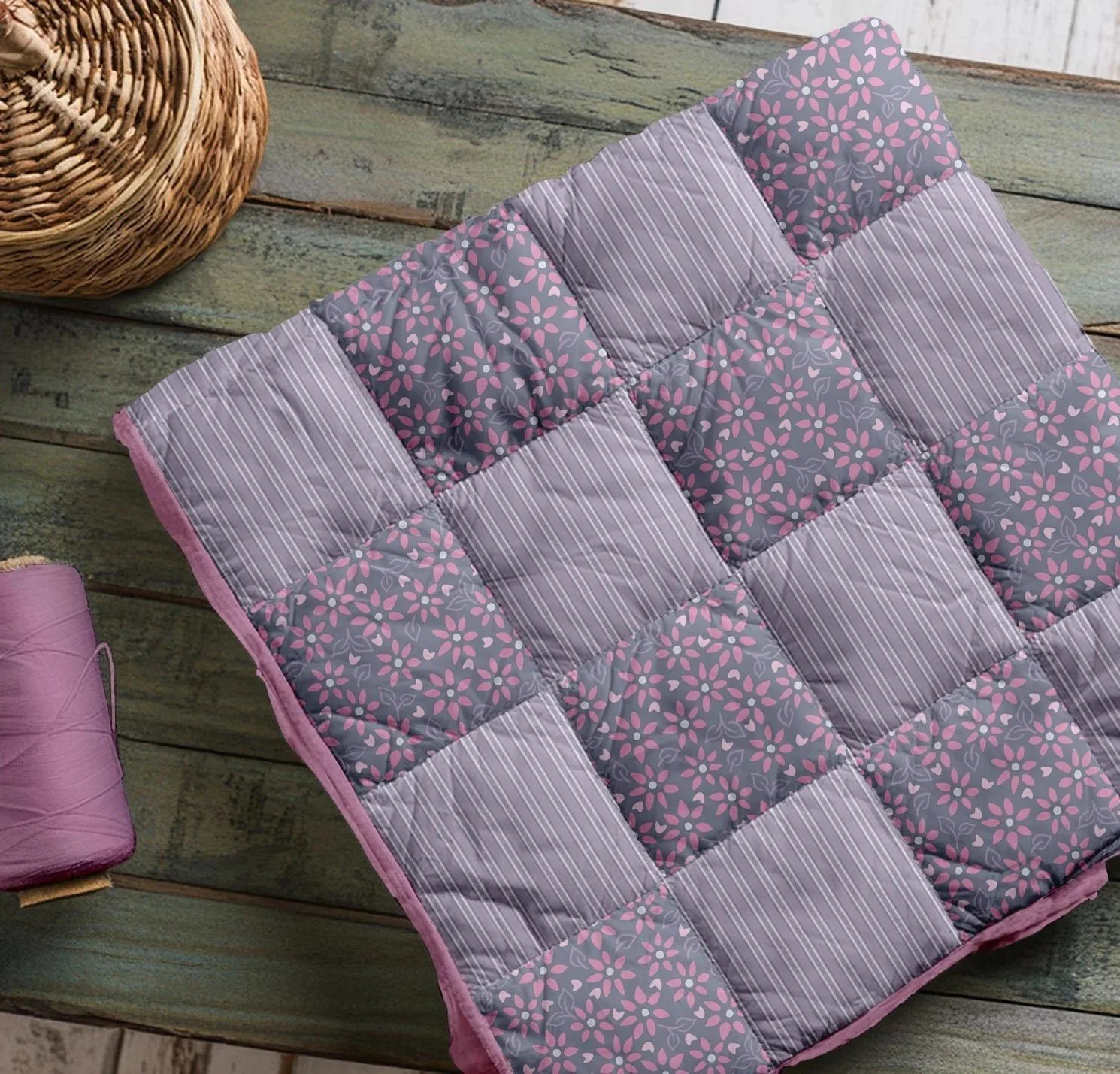


Colour Sets the Tone
Colour is often the first thing we respond to in a quilt. Soft, pale palettes tend to evoke a sense of calm and openness, while deeper tones convey weight and presence. A quilt made in warm neutrals can feel grounding and settled, while one built from cool blues and greens often conveys a lighter and quieter feel.
These colour choices affect how a quilt works in a space. A light, low-contrast quilt might recede gently into a bedroom, while a high-contrast palette can become a focal point in a living area. Each one provides a service, depending on the required mood.
For quilt makers and home decorators alike, colour is one of the most effective tools for shaping atmosphere without changing the structure of a room.
The Role of Pattern Size
The scale of the fabric pattern design plays a subtle but powerful role in the mood of a quilt. Small-scale prints tend to feel detailed and intimate, especially when repeated across many pieces. Larger patterns feel more expressive and confident, even when used sparingly.
The way patterns are combined also matters. Mixing delicate prints with solids or quiet geometrics allows a quilt to breathe. Dense pattern-on-pattern combinations can feel energetic and layered, while restrained pairings create a sense of calm.
As part of the design process, I consider how quilt fabrics will behave once stitched together, whether they’ll support the quilt’s overall mood or compete for attention.
Weight, Warmth and Everyday Comfort
Beyond colour and pattern, the physical construction of a quilt can change how it feels in daily use. Batting choice affects weight and drape, which in turn influences how a quilt is used.
A lighter quilt with minimal batting might be folded over the back of a chair, used as a casual throw, or layered on a bed. Heavier quilts with thicker batting feel more substantial and grounding, often becoming the main bed covering or a piece that stays in place.
These practical choices quietly shape our emotional response to a quilt just as much as its visual design.
Living with Quilts
Quilts aren’t just bed coverings. They are one of the most versatile textile decorating elements in a home.
They’re draped over sofas, layered at the foot of a bed, can be decorative table runners, or hung on walls. They move from room to room, are packed away and brought back out, and are handled daily rather than admired from a distance.
Because quilts are both functional and decorative, they influence a space in ways other textiles can’t. They add colour, soften furniture, introduce pattern, and create a sense of comfort that feels personal rather than styled.
Quilts Made to Be Lived With
Rather than viewing quilts as seasonal projects, I think of them as mood pieces, textiles that adapt to changing light, use, and atmosphere over time.
A single quilt can feel calm and open in one setting, expressive and playful in another, and deeply comforting when folded and used daily. The same fabric choices reveal different qualities depending on how the quilt is constructed and where it’s placed.
Thoughtful colour palettes, balanced patterns, and considered scale create pieces that can live with ease in our homes.
In the end, quilts aren’t just things people make. They’re treasured objects we live with, shaped by their colour, pattern, and use, and woven quietly into the rhythms of everyday life.